Blog

  • Speed Meets Precision: How AI is Revolutionizing Enterprise Software Development

    Speed Meets Precision: How AI is Revolutionizing Enterprise Software Development

    Speed Meets Precision: How AI is Revolutionizing Enterprise Software Development

    Enterprise software development used to drag on for months, costing you time and money at every turn. Now, AI in software development slashes those timelines while sharpening every line of code. With AI automation driving rapid deployment, your projects move from concept to production in weeks—delivering measurable results and a 340% ROI within 90 days. Let’s explore how AI solutions are reshaping your software strategy for speed and precision.

    AI Accelerating Software Development

    AI is reshaping the software development landscape with unprecedented speed and accuracy. Transitioning from traditional methods to AI-driven strategies accelerates project timelines and refines process precision.

    Faster Deployment with AI Solutions

    Imagine your projects moving from concept to completion in weeks. AI technology enables this by automating repetitive tasks and streamlining workflows. You no longer need to wait months for deployment as AI reduces development cycles significantly.

    1. Automated Testing: AI can handle testing in real-time, identifying issues faster.

    2. Efficient Coding: AI tools suggest code optimizations, improving quality.

    3. Resource Allocation: AI predicts and allocates resources where needed most.

    This rapid pace ensures your business responds swiftly to market demands, gaining a competitive edge. The future of software development is now, and it’s faster than ever. Read more about AI in enterprise software development.

    Precision in Enterprise Software Development

    Precision is key in software development, and AI enhances this aspect profoundly. By leveraging AI, your projects maintain accuracy from start to finish.

    AI tools analyze and correct errors before they escalate, ensuring high-quality outputs. With AI, predictions become more reliable, and decision-making becomes data-driven. This precision translates to significant savings—both in time and resources.

    1. Error Detection: AI identifies potential faults early, reducing debugging time.

    2. Predictive Analytics: AI forecasts project outcomes, guiding strategic decisions.

    Investing in AI not only speeds up your processes but also ensures exceptional accuracy, setting your enterprise ahead of the curve. Explore how generative AI is transforming software development.

    AI Automation in Practice

    AI automation is not just a concept; it is actively transforming how enterprises operate. This shift leads to remarkable improvements in efficiency and return on investment.

    Enhancing ROI with AI

    AI in software development isn’t just about speed or precision—it’s about return on investment. Integrating AI into your processes can yield a 340% ROI within 90 days.

    By automating mundane tasks, AI frees up your team’s time for more strategic work. It reduces the risk of human error and accelerates project timelines, directly impacting your bottom line. Seeing economic benefits quickly is no longer a dream but a reality with AI.

    1. Reduced Labor Costs: Automation handles routine tasks, cutting operational expenses.

    2. Increased Productivity: Teams focus on high-value activities, boosting efficiency.

    AI is a powerful tool in your arsenal to maximize profitability and streamline operations. Discover the state of AI and its impact on business.

    AI Solutions for IT Professionals

    For IT professionals, AI provides an array of tools designed to enhance existing systems. Its integration leads to smarter, more responsive IT infrastructures.

    AI solutions enable proactive system maintenance and smarter security protocols. This means your IT departments can anticipate issues before they arise, keeping operations smooth and secure. AI is transforming how IT departments function, paving the way for more robust and innovative solutions.

    1. Proactive Monitoring: AI constantly monitors systems, predicting potential failures.

    2. Enhanced Security: AI tools bolster defenses, adapting to new threats in real-time.

    The integration of AI in IT heralds a new era of smarter, more efficient operations, crucial for maintaining a competitive edge. Learn more about AI’s role in enterprise software development.

    The Y12.AI Advantage

    Choosing Y12.AI means embracing a future where AI and human expertise ensure your projects succeed swiftly and accurately.

    Rapid Deployment with AI Precision

    Y12.AI specializes in accelerating your project timelines without sacrificing quality. By integrating AI into workflows, projects move from planning to deployment at unprecedented speeds.

    Our approach combines AI efficiency with human oversight, ensuring every detail is addressed with care. The result? Your enterprise stays ahead, ready to meet any challenge head-on with precision and speed.

    1. Swift Execution: AI tools streamline tasks, ensuring rapid delivery.

    2. Attention to Detail: Human experts oversee AI processes, guaranteeing quality.

    Choosing Y12.AI means your enterprise is positioned to thrive in today’s fast-paced digital landscape.

    Achieving Quick ROI with Y12.AI

    Y12.AI delivers measurable results that align with your strategic goals. Our AI solutions are purpose-built to enhance your return on investment, making your enterprise more competitive.

    By choosing us, you’re not just investing in technology—you’re investing in a partner committed to your success. Our track record speaks volumes, with clients consistently experiencing significant ROI in record time.

    1. Strategic Partnerships: We collaborate closely, aligning our solutions with your vision.

    2. Proven Success: Our clients see real results, with ROI as high as 340%.

    Experience the Y12.AI difference—where speed meets precision, and your enterprise reaches new heights of success.

  • Unleashing the Power of AI in Enterprise Software Development

    Unleashing the Power of AI in Enterprise Software Development

    Unleashing the Power of AI in Enterprise Software Development

    Most enterprise software projects drag on for months with unclear results. You know speed and precision matter—waiting isn’t an option anymore. AI-powered enterprise software cuts development time drastically while boosting ROI, using autonomous AI agents paired with expert human oversight. Let’s explore how this approach reshapes enterprise transformation and delivers measurable outcomes fast.

    AI-Powered Enterprise Software Benefits

    The rapid pace of technological change demands solutions that are both quick and accurate. AI-powered enterprise software delivers just that.

    Speed and Precision in Development

    Imagine cutting your development time in half. AI enables this by automating repetitive tasks. This means your team can focus on what truly matters—creating quality software. With AI, precision is not compromised. Algorithms ensure accuracy and consistency across projects. This dual benefit of speed and precision gives you a competitive edge. Discover how AI accelerates software development without sacrificing quality.

    ROI Driven Solutions for Enterprises

    Achieving a high return on investment is crucial for any business. AI-powered solutions promise significant ROI by streamlining operations and reducing costs. For example, companies using AI can see a 340% return in just 90 days. This financial advantage allows for reinvestment in other areas of the business, propelling growth. Explore the financial impact of AI in business.

    Transforming Enterprise Operations with AI

    AI is not just enhancing operations; it is revolutionizing them. Let’s see how AI agents and human expertise work together.

    Autonomous AI Agents in Development

    AI agents handle routine tasks 24/7, freeing up your team to tackle complex problems. These agents ensure that projects move forward even when your team is not working. This constant progress translates into faster project completions. By automating mundane tasks, AI agents make it possible for your business to achieve more in less time. Learn about AI agents transforming software development.

    Human Expertise and AI Synergy

    While AI handles the routine, human oversight remains essential. Experts focus on strategic decisions and quality assurance. This synergy of AI and human skill ensures that the final product meets high standards. It also reassures stakeholders that while AI is handling the workload, human intelligence guides the process. This combination drives success and innovation, making your operations more robust. Explore how AI and human expertise fuel innovation.

    Future of AI Software Development

    The future of software development is here, and AI is leading the charge. Predictive analytics and AI’s role in gaining a competitive advantage are reshaping the industry.

    Predictive Analytics and Decision-Making

    Looking ahead, AI will enhance decision-making through predictive analytics. It analyzes data to forecast trends and outcomes, allowing you to make informed decisions. This predictive capability mitigates risks and identifies opportunities, giving you a proactive stance in the market. By harnessing AI’s analytical power, your enterprise can stay ahead of the curve.

    AI’s Role in Competitive Advantage

    As AI continues to evolve, so does its potential to provide a competitive advantage. It offers insights and efficiencies that were previously unattainable. Companies that leverage AI will not only keep up with but surpass competitors. The longer you wait to adopt AI, the more ground you may lose. Embracing AI now secures your place at the forefront of your industry.

    In summary, adopting AI-powered enterprise software is no longer optional but essential. It offers speed, precision, and a measurable ROI, transforming operations and providing a competitive edge. Stay ahead by integrating AI into your enterprise strategy today.

  • Unlocking the Future: The Benefits of AI-Powered Enterprise Software Development

    Unlocking the Future: The Benefits of AI-Powered Enterprise Software Development

    Unlocking the Future: The Benefits of AI-Powered Enterprise Software Development

    Most enterprise software projects drag on for months, draining budgets and stalling growth. AI-powered software development flips that script by combining autonomous AI agents with expert oversight to deliver rapid deployment and clear ROI. In this post, you’ll see how these enterprise software solutions accelerate your workflows and boost returns—cutting weeks off timelines without sacrificing quality. For more insights on AI’s role in business, visit this resource.

    AI-Powered Software Development Advantages

    AI-powered software development is changing how enterprises operate, offering unparalleled advantages. It combines the strengths of AI with human expertise to deliver rapid results and significant returns on investment.

    Boosting ROI with AI

    When it comes to increasing profits, AI stands out. Businesses using AI report an average 340% increase in ROI within just 90 days. This is possible because AI can handle tasks around the clock, reducing human workload and operational costs. An example of this is in AI-driven automation, which allows for constant monitoring and quick responses to system alerts. This proactive approach can prevent costly downtime and maximize your resources.

    Keep in mind that AI doesn’t just save money. It also opens up new revenue streams. For example, by leveraging AI to analyze customer data, your business can identify new market opportunities and tailor offerings to meet changing demands. For more about how AI is impacting business growth, check out this article.

    Speed and Precision in Deployment

    Deploying new software quickly and accurately is vital for staying competitive. AI-powered tools enable a transition from concept to production in just weeks. This rapid development cycle not only accelerates delivery but ensures precision. AI agents meticulously test and refine software at each stage, catching errors before they escalate into larger issues.

    Moreover, this swift deployment doesn’t mean compromising on quality. AI systems operate with high precision, ensuring that each deployment is as flawless as possible. This kind of reliability builds trust with stakeholders and can position your enterprise as a leader in your industry. Discover more about AI’s role in software development here.

    Enhancing Enterprise Solutions

    AI doesn’t just speed up processes; it enhances the overall quality of enterprise solutions. This section dives into how AI adds value by tailoring solutions specifically to meet your needs.

    Autonomous AI Agents in Action

    Imagine your routine tasks being managed seamlessly without human intervention. Autonomous AI agents make this a reality by tackling mundane tasks, freeing up your team for strategic decision-making. One noteworthy example is in IT operations, where AI agents monitor systems, manage alerts, and even resolve issues autonomously. This allows IT professionals to focus on more critical tasks that require human insight and creativity.

    These agents operate 24/7, providing consistent performance and reliability. They adapt to new challenges, ensuring your enterprise solutions remain effective and up-to-date. To understand how AI can be integrated into custom software, refer to this insightful article.

    Custom Solutions Tailored to You

    Every business is unique, and so are its software needs. AI-powered development offers custom solutions tailored precisely to your requirements. By analyzing your specific business processes, AI can create software that aligns perfectly with your operational goals. This means no more one-size-fits-all solutions that miss the mark.

    Custom AI solutions also allow for scalability. As your business grows, your software can evolve, ensuring it continues to meet your needs without requiring a complete overhaul. This flexibility is a game-changer, enabling you to adapt quickly to market changes and new opportunities.

    Future-Proofing Business with AI

    In an era of rapid change, future-proofing your business is essential. AI equips your enterprise with the tools to navigate change confidently and stay ahead of the competition.

    Navigating Change with Confidence

    AI provides the confidence to embrace change and innovation without fear. With AI, you can predict market trends, optimize operations, and adapt strategies quickly. This proactive stance means you’re not just reacting to changes but anticipating them.

    Moreover, AI-driven insights can guide your decisions, helping you pivot efficiently when necessary. Whether it’s adjusting your product offerings or rethinking your marketing strategies, AI gives you the data-backed insights to make informed choices.

    The Role of Expertise in AI Integration

    While AI offers incredible benefits, the role of human expertise remains crucial. Senior specialists provide strategic oversight, ensuring AI solutions are effectively integrated into your operations. This collaboration between AI and human expertise guarantees that your AI systems function optimally and align with your business goals.

    By leveraging both AI and human insight, you ensure that your enterprise not only keeps pace with technological advancements but also leads the way in your industry. The combination of AI efficiency and human creativity is powerful, driving innovation and maintaining a competitive edge.

    In conclusion, AI-powered software development is more than just a trend—it’s a transformative approach that offers speed, precision, and significant ROI. By integrating AI into your enterprise, you set the stage for sustained growth and future success.

  • Unleashing the Power of AI and Human Expertise in Engineering Services

    Unleashing the Power of AI and Human Expertise in Engineering Services

    Unleashing the Power of AI and Human Expertise in Engineering Services

    Forget the old divide between AI and human skill in engineering services. When AI engineering teams join forces with seasoned experts, projects move faster with sharper precision. You’ll see how this blend transforms CAD drafting, PCB design, and rapid prototyping into streamlined processes that deliver measurable ROI. Keep reading to understand why combining AI with human expertise is your next strategic advantage. For further insights, check out this article.

    Harnessing AI in Engineering Services

    Combining AI with human expertise revolutionizes engineering processes. This synergy leads to faster project completion and higher precision.

    Speed and Precision in CAD Drafting

    AI brings a new level of efficiency to CAD drafting. It automates repetitive tasks, allowing you to focus on creativity. AI can process complex calculations in seconds, which would take humans much longer. This means you can complete projects faster while maintaining high standards.

    For instance, AI tools can automatically adjust designs to fit specific parameters. This ensures every element is perfectly aligned. As a result, you get more accurate drafts, reducing errors and rework. This efficiency saves time and resources, ultimately boosting your bottom line.

    AI also enables real-time collaboration. Multiple team members can work on a project simultaneously, making changes that everyone can see instantly. This collaborative approach not only speeds up the process but also fosters innovation.

    Advancing PCB Design with AI

    AI’s impact on PCB design is equally profound. It simplifies the design process by predicting potential issues before they occur. This foresight reduces the likelihood of costly mistakes and streamlines production.

    For example, AI can simulate various scenarios to test designs. This capability allows you to foresee potential faults and make necessary adjustments early. The result? More reliable and robust designs that meet stringent quality standards.

    Furthermore, AI can optimize layouts for better performance. By analyzing thousands of configurations, AI finds the most efficient design, ensuring optimal signal integrity and functionality. This leads to improved product performance and customer satisfaction.

    The Role of Human Expertise

    While AI brings speed and precision, human expertise drives innovation and quality. This partnership ensures the best outcomes in engineering services.

    Leveraging Human Insights for Innovation

    Humans excel where intuition and creativity are needed. Your expertise provides the insight required to innovate and push boundaries. AI handles data and repetitive tasks, freeing you to think strategically and creatively.

    The combination of AI’s data processing power and human intuition can lead to groundbreaking ideas. While AI suggests possibilities, your experience helps select the best solutions. This partnership fosters innovation that keeps you ahead of the competition.

    Most people think AI alone can replace human intuition. However, this collaboration proves that human insights are irreplaceable. Together, you can drive meaningful innovation and transformation.

    Ensuring Quality in Rapid Prototyping

    In rapid prototyping, quality is key. AI helps maintain this by automating quality checks and flagging potential issues. But it’s your expertise that ensures these checks align with industry standards and customer expectations.

    AI can identify anomalies and suggest corrections. Yet, your knowledge determines if these corrections meet the desired quality. This ensures prototypes not only function well but also meet market needs.

    By combining AI’s efficiency with your quality control, you deliver prototypes that impress and perform. This approach reduces testing time and speeds up the development cycle, leading to faster market entry.

    Achieving Enterprise Transformation

    The integration of AI in engineering services leads to significant enterprise transformation. It reshapes how businesses operate, improving efficiency and outcomes.

    Benefits of AI Engineering in Business

    AI engineering offers numerous benefits for businesses. It reduces operational costs by automating routine tasks, allowing you to allocate resources more effectively. With AI, processes become faster and more reliable, leading to improved productivity.

    A study found that companies using AI reported a 340% increase in ROI within 90 days. This demonstrates the tangible financial benefits of AI integration. By investing in AI, you’re not just improving processes but also boosting profitability.

    AI also enhances decision-making. It provides data-driven insights that inform strategic choices, leading to more informed and effective decisions. This positions your business for long-term success and growth.

    If you’re curious about AI’s impact on business transformation, explore this comprehensive guide.

    Collaborative Potential of AI and Humans

    The collaboration between AI and humans is where true potential lies. Together, they achieve what neither could alone. While AI handles data processing, humans provide context and strategic oversight.

    This partnership leads to better project outcomes. AI takes care of routine tasks, allowing you to focus on high-value activities. This not only improves efficiency but also enhances job satisfaction and morale.

    Moreover, this collaboration fosters a culture of continuous learning and innovation. As you work alongside AI, you acquire new skills and insights, keeping you competitive in a rapidly evolving industry.

    In conclusion, blending AI with human expertise transforms engineering services, delivering speed, precision, and innovation. This synergy is your strategic advantage in achieving enterprise transformation and staying ahead of the curve.

  • Striking the Perfect Balance: AI Automation Meets Human Oversight

    Striking the Perfect Balance: AI Automation Meets Human Oversight

    Striking the Perfect Balance: AI Automation Meets Human Oversight

    AI automation alone can’t solve every enterprise challenge. You need human oversight to catch blind spots and steer complex decisions. The winning formula combines autonomous agents with expert input—delivering speed without sacrificing control. In this post, you’ll learn how blending AI automation with human oversight drives smarter, faster outcomes for your business. For more insights, check out this link.

    The Power of AI Automation

    AI automation is reshaping how businesses operate, offering new ways to boost productivity and innovation. By integrating smart technology into daily operations, companies can achieve significant gains in efficiency and outcomes.

    Enhancing Enterprise Solutions

    AI-powered solutions streamline complex tasks, allowing your team to focus on strategic goals. From data analysis to customer interactions, AI handles repetitive tasks with precision. This frees up valuable time for your staff. Imagine a system that not only processes data but also predicts trends. This capability enhances decision-making and improves performance across the board. According to a recent study, businesses using AI saw a 30% increase in productivity within the first year. The secret lies in its ability to handle tasks tirelessly, ensuring accuracy and speed. Learn more about balancing AI and human input here.

    Benefits of Autonomous Agents

    Autonomous agents are game-changers in the tech landscape. They operate around the clock, managing tasks without human intervention. This capability ensures continuous workflow and reduces downtime. These agents excel in environments that demand consistency and accuracy. For example, consider a customer service department where agents handle routine inquiries while human staff tackle complex cases. This approach not only enhances service quality but also customer satisfaction. The beauty of autonomous agents lies in their ability to learn and adapt, making them invaluable in dynamic settings. Explore how AI agents transform productivity.

    Importance of Human Oversight

    While AI is powerful, human oversight remains crucial. It’s the human touch that ensures AI tools are aligned with business goals and ethical standards.

    Balancing Efficiency with Insight

    Efficiency without insight can lead to missed opportunities. Human oversight provides a critical layer of understanding that AI alone cannot offer. By blending machine efficiency with human judgment, businesses can achieve optimal outcomes. This combination ensures that decisions are not just fast but also informed and strategic. It’s important to view AI as a partner rather than a replacement. The human ability to interpret nuances and foresee potential issues complements AI’s analytical prowess. Discover more about integrating human insight with AI.

    Strategic Decision-Making in IT

    In IT, strategic decisions can make or break an organization. AI provides data-driven insights, but humans make the final call. This partnership ensures that decisions are both informed and aligned with company goals. Imagine an IT department that uses AI to monitor network security while experts focus on developing proactive strategies. This synergy not only strengthens security but also fosters innovation. Most leaders believe that AI enhances decision-making, but the true magic happens when it’s paired with expert oversight. Read more on balancing technology and human input in IT.

    Achieving AI-Powered Transformation

    Combining AI with human oversight unlocks a new era of transformation, enabling enterprises to streamline operations and boost their ROI significantly.

    Streamlining Operations and ROI

    With AI, businesses can streamline operations, cutting down on unnecessary steps and focusing on key objectives. This approach not only saves time but also enhances ROI. For example, AI can automate inventory management, leading to a 20% reduction in operational costs. When paired with human oversight, these systems are fine-tuned to meet specific business needs, maximizing efficiency and profitability. The longer you wait to integrate AI, the more opportunities you might miss. It’s time to act and harness the benefits. Learn how to improve ROI with AI.

    Y12.AI: Your Partner in Change

    At Y12.AI, we specialize in merging AI capabilities with expert guidance to deliver exceptional results. Our solutions are designed to meet the unique needs of your business, ensuring a seamless transition into the future of enterprise operations. Whether you need assistance with IT support, software development, or cybersecurity, our team is ready to help. We understand the value of combining AI with human insight to drive growth and innovation. Partner with us and experience the difference. Discover how Y12.AI can transform your business today.

    By understanding the power of AI and human collaboration, your business can achieve unparalleled success. Don’t just adapt to change—lead it with Y12.AI.

  • AI Agents on Guard: Elevating Cybersecurity with Next-Level Automation

    AI Agents on Guard: Elevating Cybersecurity with Next-Level Automation

    AI Agents on Guard: Elevating Cybersecurity with Next-Level Automation

    Cyber threats evolve faster than any team can keep up. Your cybersecurity staff spends hours triaging alerts—time that could be spent on strategic initiatives. AI cybersecurity with autonomous agents changes the game by automating threat detection and response around the clock. In this post, you’ll see how next-level AI automation boosts enterprise protection while cutting manual workload dramatically. Learn more here.

    AI Cybersecurity Unleashed

    AI is reshaping how businesses defend against cyber threats. It’s not just about software; it’s about smart, autonomous agents that work tirelessly.

    The Power of Autonomous Agents

    Imagine having a team that never sleeps. Autonomous agents are like vigilant guards for your digital assets. They scan, analyze, and react to threats instantly. These agents use AI to identify patterns and potential breaches faster than any human could. They don’t get tired or distracted. This constant surveillance is essential in a world where threats are always lurking. Explore more about their capabilities.

    Autonomous agents don’t replace your team; they empower it. By handling routine tasks, they free up human experts to focus on complex issues. This synergy creates a more robust defense system. When seconds count, having these agents can mean the difference between a minor incident and a major breach.

    Enterprise Protection With AI Automation

    Harnessing AI automation means you’re not just reacting to threats but anticipating them. AI tools analyze vast amounts of data, identifying vulnerabilities before they can be exploited. This proactive approach is crucial for modern enterprises.

    AI automation reduces the burden on your IT department. Instead of chasing ghosts, your team can concentrate on strengthening your digital infrastructure. With AI, you move from a defensive to an offensive strategy, always staying one step ahead of cybercriminals. Discover how AI shifts the balance.

    Reducing Manual Workload

    A major advantage of AI in cybersecurity is how it slashes manual labor. Teams often spend hours on repetitive tasks that AI can handle effortlessly.

    Streamlining Cyber Threat Management

    Dealing with threats is exhausting. But what if AI could handle the bulk of this work? AI systems can triage alerts, prioritize threats, and even take initial actions automatically. This means fewer false alarms and more time focusing on genuine threats.

    With AI, your team can focus on strategic decisions. No more drowning in data or false positives. AI helps prioritize what matters, ensuring your resources are used effectively. This approach not only saves time but also enhances security. Learn more about its impact.

    Enhancing Response Times

    Speed is crucial when dealing with cyber threats. AI systems can respond to threats instantly, reducing potential damage. This rapid response is something human teams can’t match on their own.

    AI’s ability to analyze and act on data in real time ensures that threats are neutralized quickly. This rapid action minimizes risk and keeps your systems safe. By integrating AI, you’re not just improving response times; you’re safeguarding your enterprise’s future.

    Y12.AI: A Game Changer

    Y12.AI is at the forefront of AI-driven cybersecurity, offering solutions that transform how businesses protect their digital assets.

    Proven ROI and Efficiency

    Investing in AI doesn’t just improve security; it also boosts your bottom line. Y12.AI delivers a significant return on investment, with clients seeing an average 340% ROI within 90 days. This isn’t just about cutting costs; it’s about enhancing efficiency and ensuring long-term success.

    With Y12.AI, you’re not just buying a product; you’re investing in your enterprise’s future. The benefits are clear: reduced manual workload, faster response times, and overall better protection. Read more about these benefits.

    24/7 Threat Management Capabilities

    Cyber threats don’t adhere to office hours. Y12.AI provides round-the-clock protection, ensuring that your systems are always guarded. This constant vigilance is vital for maintaining security in today’s digital landscape.

    By choosing Y12.AI, you’re partnering with a leader in AI-powered security. Our autonomous agents, combined with expert oversight, offer unmatched protection. Don’t leave your enterprise’s safety to chance; choose a solution that works tirelessly to keep you secure.

  • Unleashing the Power of AI-Powered Predictive Analytics in Enterprises

    Unleashing the Power of AI-Powered Predictive Analytics in Enterprises

    Unleashing the Power of AI-Powered Predictive Analytics in Enterprises

    Most enterprises still rely on guesswork to shape their future. That approach wastes time, misses key trends, and slows growth. AI-powered predictive analytics changes the rules—turning massive data into clear, actionable insights that drive faster decisions and better results. In this post, you’ll see how Y12.AI solutions deliver precise predictions that sharpen your competitive edge and boost ROI in record time. For insights into best practices, check out this guide on building AI predictive analytics models.

    AI-Driven Business Insights

    Unlocking the potential of AI in business is like opening a treasure chest of opportunities. With predictive analytics, you can foresee trends and make data-driven decisions. This section explores how these tools are reshaping enterprise landscapes.

    Understanding Predictive Analytics

    Imagine being able to see the future of your business with clarity. Predictive analytics uses historical data to forecast outcomes. By analyzing patterns, it provides insights that guide strategic decisions. This method goes beyond traditional data analysis by predicting future trends based on past behavior.

    One example is how retailers use these analytics to forecast inventory needs. By predicting customer demand, they reduce excess stock and meet customer needs efficiently. This not only cuts costs but also boosts customer satisfaction. For a deeper dive into the basics, you can explore this beginner’s guide to using AI predictive analytics for business.

    Benefits for Enterprise Operations

    Businesses today need to outpace competitors by being proactive rather than reactive. Here’s where predictive analytics comes into play, offering numerous benefits to enterprise operations.

    Firstly, predictive analytics helps in optimizing resource allocation. By forecasting market trends, businesses can allocate their resources where they will have the most impact. This ensures efficient operations and maximizes potential returns.

    Another benefit is risk management. Predictive analytics identifies potential risks before they become problems. For example, financial institutions use it to foresee credit defaults, allowing them to mitigate risks efficiently.

    These tools also enhance customer engagement by analyzing customer behavior to personalize marketing strategies. As a result, businesses see increased loyalty and sales. In a world where customer preferences change rapidly, staying ahead is a game-changer.

    Implementing Enterprise AI Solutions

    As we delve further into AI applications, implementing these technologies becomes crucial. Getting started with AI solutions can feel daunting, but it doesn’t have to be. Here’s how you can integrate AI to transform your operations.

    Integrating Y12.AI Solutions

    Y12.AI offers a seamless way to integrate AI into your business. Our solutions are designed to fit your unique needs and elevate your operations quickly. You don’t need to be a tech guru to harness the power of AI—our team makes it easy and accessible.

    Y12.AI’s autonomous agents work around the clock, handling routine tasks efficiently. This frees up your team to focus on strategic initiatives. For instance, our clients have reported a 340% return on investment within just 90 days of implementation.

    Our solutions are also scalable, meaning you can start small and expand as your needs grow. Whether you’re in engineering, IT, or cybersecurity, we offer comprehensive services tailored for your sector. To learn more about the practical applications of predictive analytics, explore this blog on predictive analytics in business.

    Overcoming Deployment Challenges

    Deploying AI solutions comes with its set of challenges, but they are surmountable. One major hurdle is the integration with existing systems. Y12.AI addresses this by offering customizable solutions that fit seamlessly into your current infrastructure.

    Another challenge is ensuring data quality. AI relies on accurate data to function effectively. We help by providing tools and expertise to clean and organize your data, ensuring optimal performance of our AI systems.

    Finally, there’s the challenge of change management. Transitioning to AI-driven operations requires a shift in mindset. We support you with training and resources to ease this transition, ensuring that your team is ready to embrace new technologies.

    Future of AI in Business Optimization

    Looking ahead, AI continues to revolutionize how businesses operate. The future is about leveraging AI to not just optimize but to innovate at every level of your organization.

    Anticipating Trends with AI

    What if you could anticipate the next big trend in your industry? With AI, you can. AI tools analyze vast amounts of data faster than any human can, spotting emerging trends before they become mainstream. This gives you a competitive edge, allowing you to adapt and thrive in changing markets.

    For instance, AI can predict shifts in consumer behavior, enabling you to adjust your offerings accordingly. This proactive approach means you’re always one step ahead, ready to meet the demands of tomorrow.

    By staying informed about AI advancements, you position your business to leverage these tools effectively. For strategic insights, this blog explores how businesses can plan ahead with AI.

    Enhancing ROI Through Predictive Analytics

    Predictive analytics is more than just a buzzword; it’s a powerful tool that enhances ROI. By making informed decisions, businesses can optimize operations and increase profitability.

    Consider how predictive maintenance can save costs in manufacturing. By foreseeing equipment failures, companies can perform maintenance proactively, minimizing downtime and repair costs. This kind of foresight is invaluable in maintaining productivity and profitability.

    The longer you wait to implement these tools, the more opportunities you miss. Start small, measure the outcomes, and scale your efforts. Predictive analytics is not just about seeing the future; it’s about shaping it to your advantage.

    In conclusion, AI-powered predictive analytics is transforming the enterprise landscape. By integrating Y12.AI solutions, you can enhance efficiency, manage risks, and unlock new growth opportunities. Don’t just keep pace with change—lead it.

  • Unlocking The Role Of AI in Accelerating Enterprise Software Development

    Unlocking The Role Of AI in Accelerating Enterprise Software Development

    Unlocking AI’s Role in Accelerating Enterprise Software Development

    Legacy software development cycles drain your resources and stall innovation. AI software development is rewriting those rules, slashing delivery times while boosting quality. Y12.AI combines autonomous agents with expert oversight to accelerate your projects from concept to production—delivering measurable ROI in weeks, not months. Keep reading to see how your enterprise can harness AI-powered solutions for rapid deployment and lasting impact. Read more.

    Accelerating Software Development with AI

    Legacy systems often hold back progress, but AI offers a new path forward. Let’s explore how AI software development is changing the game for enterprises like yours.

    AI Software Development Explained

    Imagine cutting development times in half. AI software development does this by using powerful algorithms to handle repetitive tasks. This means your team spends less time on mundane work and more on strategic planning. For example, AI can automate testing processes, identifying bugs in seconds. This frees up human resources for creative problem-solving, saving you time and money. Moreover, AI systems learn from each project, constantly improving over time. This adaptability is essential in a world where technology evolves so quickly.

    By integrating AI into your development cycle, you’re not just speeding up processes; you’re enhancing the overall quality of the software. Tools powered by AI ensure that the output is not only quick but also reliable. This dependable nature of AI systems brings peace of mind, knowing that the software you deploy will perform as expected. Learn more about AI’s impact on software delivery.

    Enterprise Transformation through AI

    AI isn’t just about speeding things up; it’s about transforming the way enterprises operate. With AI, companies can make data-driven decisions that were previously impossible. This transformation is crucial for staying competitive in today’s fast-paced market.

    AI allows enterprises to predict trends, understand customer behavior, and make informed decisions based on real-time data. This proactive approach ensures that businesses are always a step ahead. Furthermore, AI’s ability to integrate with existing systems means you won’t face a disruptive transition. Instead, you’ll enjoy a smooth shift to a more efficient way of working.

    Key Benefits of AI-Powered Solutions

    It’s time to dive into the specific advantages AI brings to the table. These AI-powered solutions offer more than just speed—they deliver tangible benefits for your business.

    Autonomous Agents in Action

    Autonomous agents are at the heart of AI’s capabilities. They work tirelessly around the clock, handling tasks that would otherwise require human intervention. For instance, these agents can monitor systems, identify issues, and even suggest solutions, all without human input.

    This round-the-clock assistance ensures that your enterprise operates seamlessly. Imagine having a team that never sleeps, always ready to tackle any challenge. These agents improve efficiency and free up your human resources for more strategic tasks. By reducing errors and enhancing productivity, autonomous agents provide a clear competitive edge.

    Rapid Deployment for Faster Results

    Fast deployment is a game-changer in software development. With AI, you can bring products to market quickly, capturing opportunities before competitors. This speed is vital in industries where being first can mean the difference between success and failure.

    AI accelerates deployment by automating processes that traditionally required manual effort. From code review to final launch, AI streamlines every step, ensuring a swift transition from development to production. This rapid deployment doesn’t sacrifice quality; in fact, it enhances it by maintaining strict standards throughout. Discover how AI accelerates enterprise value delivery.

    Maximizing ROI in Software Development

    Investing in AI brings about remarkable returns. Here, we’ll explore how AI maximizes ROI by boosting efficiency and speed in your software development process.

    AI’s Impact on Efficiency and Speed

    AI dramatically enhances both efficiency and speed. It reduces development cycles by handling repetitive tasks and allowing your team to focus on innovation. For example, AI can automate complex algorithms, cutting down time from weeks to mere days.

    By employing AI, you’re not just saving time; you’re also cutting costs. With fewer resources spent on mundane tasks, more budget is available for strategic initiatives. This efficiency translates directly into improved ROI, offering a substantial return on your investment in AI.

    Y12.AI’s Unique Approach to Success

    Y12.AI sets itself apart with a unique blend of AI and human expertise. Our approach combines the tireless work of autonomous agents with the strategic insight of seasoned professionals. This synergy ensures that our solutions are both effective and innovative.

    Our track record speaks for itself, with over 500 projects delivered and a client satisfaction rate of 98%. We focus on outcomes, delivering results that matter in weeks, not months. This commitment to excellence ensures that your enterprise not only meets its goals but exceeds them. Explore how Y12.AI can transform your operations.

    By adopting AI solutions, you position your enterprise for long-term success. The benefits of AI are clear: faster deployment, improved efficiency, and a substantial increase in ROI. Don’t wait to embrace this transformation. The future of software development is here, and it’s powered by AI.

  • Wasm Microservices: A New Operating Model for Enterprise-Scale Agility and Control

    Wasm Microservices: A New Operating Model for Enterprise-Scale Agility and Control

    Enterprises are hitting the limits of what containers alone can deliver for speed, safety, and portability across cloud and edge. WebAssembly (Wasm) microservices are emerging as a pragmatic next step—packing near-native performance, strong sandboxing, and language-agnostic development into a footprint that boots in milliseconds and runs consistently from data centers to devices. For CIOs, CTOs, and platform leaders, the promise is an operating model that compresses time-to-value, reduces blast radius, and expands deployment optionality without rewriting the entire estate.

    Wasm Microservices for Enterprise-Grade Modernization

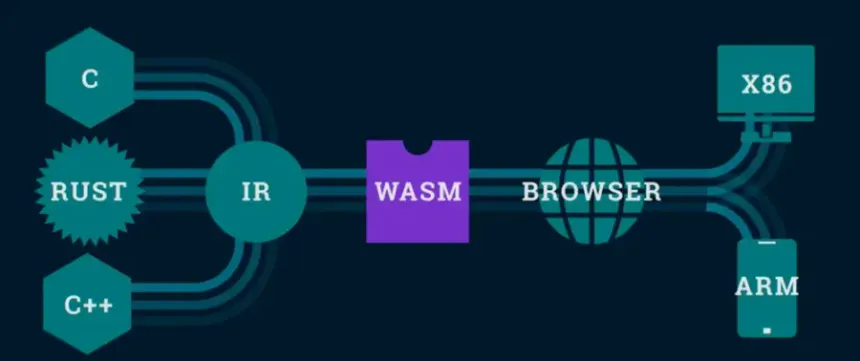
    Wasm began in the browser, but its server and edge trajectory is now unmistakable. With WASI (WebAssembly System Interface), modules can run outside the browser with a capability-based security model that dramatically reduces ambient authority. This matters for regulated environments and multi-tenant platforms where least privilege is not just good hygiene—it is an audit requirement. Compared to containers, Wasm modules start faster, consume fewer resources, and offer tighter isolation, making them well suited for latency-sensitive services, on-demand workloads, request-time plug-ins, and policy-driven extensibility in existing platforms.

    Think of Wasm microservices as small, self-contained compute units compiled from languages like Rust, Go, C/C++, or even higher-level languages via toolchains. They package logic, not an entire operating system image. The result is improved portability across diverse substrates—Kubernetes, serverless frameworks, edge runtimes, and even embedded systems—without the rebuilding gymnastics that typically accompany multi-cloud and edge expansions.

    Strategic Context: Why Now

    The enterprise pressure profile is clear: expand digital reach, cut unit costs, and harden security while satisfying regulators and customers. Edge growth is real, with data gravity shifting to storefronts, factories, clinics, and mobile environments. Meanwhile, cloud egress, cold starts, and lateral movement risks expose limits in existing models. Wasm microservices offer a disciplined way to consolidate runtimes, deploy closer to the moment of value, and enforce precise capability boundaries.

    Equally important is strategic bargaining power. Wasm packages can live as OCI artifacts and run on multiple runtimes (Wasmtime, WasmEdge) and orchestration layers (Kubernetes, Nomad, serverless, or Wasm-native platforms), creating a credible portability story. That reduces vendor lock-in, supports exit strategies, and enables economic arbitrage across clouds and edges. In short: Wasm is a modernization accelerant that aligns with resilient architecture principles and cost-aware operations.

    Architecture Blueprint for Wasm-Native Services

    Core Components

    An enterprise-ready Wasm architecture centers on a few essentials: a trusted module registry with signing (Sigstore cosign), a runtime layer (e.g., Wasmtime or WasmEdge) exposed via Kubernetes, Nomad, or a lightweight edge supervisor; a capability broker using WASI and component model interfaces; a policy layer (OPA/Rego) for authorization and isolation rules; and full-fidelity observability using OpenTelemetry. Secrets should be delivered through short-lived credentials (SPIFFE/SPIRE) with workload identity, not static keys baked into images. Together, these elements combine into a platform that is both secure by default and measurable in production.

    Patterns That Work

    Lean for sidecar-less designs when possible: Wasm modules can integrate telemetry and policy hooks without heavy per-pod sidecars. Use capability whitelisting to grant explicit filesystem, network, and clock access. Favor message-oriented integration via NATS or Kafka; Wasm modules excel at stateless compute, with state externalized in managed data services. For extensibility in existing apps (APIs, proxies, data pipelines), Wasm is ideal for hot-pluggable filters and request-time logic—think policy enforcement, data redaction, or protocol transformation without restarting the core service.

    Integrating With the Existing Estate

    Most enterprises will run Wasm alongside containers, not instead of them. Kubernetes remains the control plane of choice; use the containerd wasm shim or Krustlet to schedule Wasm workloads alongside containers. Place a standard API gateway in front (Kong, Envoy), and wire in policy engines and identity providers via established patterns. At the data layer, lean on service brokers and gRPC/HTTP bindings exposed by the Wasm component model rather than direct database drivers. This ensures portability and simplifies compliance audits by reducing the number of privileged access paths.

    Operational Model and Tooling

    CI/CD for Wasm

    Modern pipelines should treat Wasm modules as first-class build artifacts. Compile with reproducible builds, attach SBOMs (SPDX/CycloneDX), sign with cosign, and store in an OCI-compliant registry. Unit and property-based tests must run in the same runtime as production to avoid drift. Incorporate fuzzing—especially for interfaces handling untrusted input—to exploit the smaller attack surface and prevent logic bombs typical in plug-in architectures.

    Orchestration Options

    Enterprises have three pragmatic paths: augment Kubernetes with Wasm via containerd shims and CRDs; adopt a Wasm-native framework like Fermyon Spin for ultra-fast web APIs and event triggers; or use HashiCorp Nomad with integrated Wasm support for mixed environments. Each enables rolling, canary, and blue/green strategies, but Spin also shines for per-request module instantiation, which is compelling for bursty workloads and policy enforcement at the edge. Regardless of approach, standardize deployment descriptors and promote them through environments using the same promotion rules you use for containers.

    Security Engineering

    Wasm’s sandboxing is a feature, not a magic shield. Strengthen it with: capability-deny defaults via WASI; zero-trust workload identity (SPIFFE) and short-lived mTLS; SLSA-aligned builds; signed modules and transparent verification at admission; continuous SBOM scanning; and posture assessment integrated with your CSPM/CIEM tools. Remember the principle: fewer capabilities, fewer ways to pivot. For regulated workloads, document the capability grants per module and map them to control frameworks like SOC 2, HIPAA, or ISO 27001 for audit-ready evidence.

    Performance and Cost Dynamics

    Cold starts for Wasm modules commonly land in the tens of milliseconds, compared to hundreds for many containerized microservices and seconds for some serverless cold starts. Memory footprints are smaller because modules carry no OS baggage. For CPU-bound tasks, Wasm can approach native speeds, and with WASM SIMD, certain analytics or transformation tasks become competitive at the edge. The business translation is straightforward: denser packing on nodes, lower idle cost, and the ability to allocate compute precisely when requests arrive. For high-volume, spiky traffic—checkout flows, personalization, security filtering—this can produce double-digit infrastructure savings while improving tail latency.

    What to Measure

    Track p95/p99 latencies for cold and warm paths, per-request CPU/memory, module instantiation time, and policy evaluation overhead. Monitor capability grant changes as configuration drift. Tie these to business KPIs: conversion rates under load, SLA adherence in remote sites, and the ratio of spend to peak throughput. Wasm should show measurable gains in these metrics if workloads are well-suited.

    Migration Path and Risk Management

    Start with candidates that are stateless, compute-heavy, and latency-sensitive: request-time transformations, image/video thumbnails, protocol mediation, fraud checks, and policy engines. Wrap legacy services with Wasm-based adapters to standardize ingress/egress behavior. Use the strangler pattern to gradually carve off endpoints into Wasm modules. Maintain a clean contract via the component model so modules remain portable as runtimes evolve.

    Pilot Criteria and Execution

    Define a 90-day pilot with a bounded scope, ideally an API or pipeline that experiences volatile demand. Set success metrics: 30–50% cold-start improvement, 20% resource reduction under equivalent load, and zero P1 incidents. Include a security objective: reduce granted capabilities by at least 50% versus containerized equivalents. Run A/B traffic between container and Wasm implementations, capture telemetry via OpenTelemetry, and produce an executive readout that translates technical deltas to financial impact.

    Business Outcomes You Can Bank On

    Adopting Wasm microservices pays off along three dimensions. First, agility: polyglot development allows teams to choose the best-fit language without fragmenting runtime governance, while near-instant startup accelerates deployment patterns like on-demand scaling and just-in-time plug-ins. Second, efficiency: smaller footprints and faster spin-up lower compute and memory costs, especially valuable at the edge where hardware is dear and remote operations are difficult. Third, risk reduction: the capability model shrinks the blast radius and simplifies compliance narratives, turning audit exercises into evidence-driven, repeatable processes rather than bespoke explanations.

    There is also a cultural uptick. Platform engineering teams gain a portable abstraction to unify cloud and edge under one delivery model. Line-of-business teams see faster prototype-to-production cycles. Security teams get guardrails they can interrogate and automate. These outcomes are mutually reinforcing: velocity that stays inside the rails tends to stay in production.

    Governance, Compliance, and Data Protection

    Wasm’s fine-grained permissions integrate well with enterprise governance. Map permissions like network access, filesystem paths, and environment variables to control requirements in SOC 2 CC6/CC7, HIPAA 164.312 (technical safeguards), and ISO 27001 Annex A controls. Because modules lack ambient OS access, evidence shows up cleanly in audits: a module with no network capability cannot exfiltrate data, and one with no filesystem capability cannot read restricted paths. Pair this with continuous monitoring of capability drift and signed artifact enforcement at admission for strong provenance.

    For privacy-sensitive services, move anonymization, tokenization, and redaction into Wasm-based policy filters that run close to data origination. This reduces the need to shuttle raw sensitive data across networks and offers a deterministic enforcement point that is easy to test and certify. Data governance improves not by adding meetings, but by reifying policy into fast, verifiable modules.

    Interoperability and Ecosystem Maturity

    Fear of ecosystem churn is reasonable. The good news: the Wasm component model stabilizes cross-language interfaces, and OCI registries provide a familiar distribution channel. Major runtimes like Wasmtime and WasmEdge are production-hardened, and Kubernetes integration via containerd shims, Krustlet, and gateway plug-ins is battle-tested. Observability lands through OpenTelemetry; policy via OPA; identity via SPIFFE/SPIRE. In other words, Wasm fits the enterprise toolchain rather than requiring a wholesale replacement.

    For platform extensibility, Wasm plug-ins are increasingly favored in service proxies, databases, and data platforms. This gives you a path to standardize extension development across products and teams, creating reusable modules governed by the same signing, testing, and promotion rules. It’s the difference between bespoke scripting and a managed compute fabric.

    Forward View: Where This Is Headed

    Three developments will push Wasm deeper into the enterprise stack. First, WASI Preview 2 and the component model will make inter-module composition and interface stability robust enough for large-scale programs. Second, integration with serverless and edge providers will mature, turning Wasm into a universal deployment target with consistent economics. Third, AI workloads will adopt Wasm for policy-controlled inference at the edge, enabling privacy-preserving, low-latency model execution with deterministic performance envelopes.

    The sooner organizations pilot Wasm microservices, the sooner they will learn where this model shines and where containers still dominate. A dual model will likely persist for years, but those who standardize the Wasm path now will own the migration curve—not be owned by it. By treating Wasm as a strategic operating model rather than a tactical experiment, enterprises can compress innovation cycles, shore up security, and reclaim control over where and how they run the business of software.

  • Privileged Access Governance: The Executive Playbook for Zero‑Trust Enterprises

    Privileged Access Governance: The Executive Playbook for Zero‑Trust Enterprises

    Boardrooms are waking up to a simple truth: in an environment where identities are the new perimeter and attackers move laterally in minutes, privileged access governance (PAG) is no longer a back-office control—it’s an enterprise strategy. The organizations winning today treat privileged access as a dynamic, continuously verified capability that enables speed, compliance, and resilience, not merely a password vault. This article outlines a pragmatic, executive-caliber blueprint to elevate PAG from a set of tools to a measurable, zero-trust operating model.

    Strategic Context: From Static Privileges to Continuous Authorization

    Traditional approaches grant standing privileges to admin accounts, service identities, and third parties—often over‑scoped and long‑lived. That model collapses under modern threats. Zero-trust architecture reframes privileged access as a just-in-time, least-privilege, policy-driven decision made at each request, informed by identity, device health, behavior, and data sensitivity.

    Done right, PAG becomes a central pillar of enterprise risk reduction and operational efficiency. It avoids the drag of manual approvals, limits the blast radius of compromised credentials, and creates defensible evidence for auditors—without slowing down developers or operations teams.

    The Five Pillars of a Mature PAG Program

    Successful programs align technology with operating disciplines. Use these pillars as the north star:

    1. Discover and Classify — Enumerate privileged accounts and roles across cloud, on‑prem systems, databases, SaaS, and CI/CD. Classify crown jewels and map who can touch them. Create identity lineage between human and non‑human (service, workload, robotic process) identities.

    2. Eliminate Standing Privilege — Replace persistent admin rights with just‑in‑time (JIT) elevation, time‑boxed sessions, and ephemeral credentials. Adopt zero standing privilege (ZSP) as a key goal.

    3. Govern with Policy — Codify role and attribute-based policies (RBAC → ABAC) that incorporate context: user role, device trust, geolocation, data sensitivity, and session risk.

    4. Monitor and Automate — Record privileged sessions, apply behavioral analytics for anomaly detection, and automate revocation, rotation, and re‑certification workflows through SOAR and ITSM integration.

    5. Prove and Improve — Continuously attest privileges, generate evidence for SOC 2, HIPAA, and HITRUST, and quantify risk reduction via metrics that matter to executives.

    Target-State Architecture: How the Pieces Fit

    A high-performing PAG architecture composes best-of-breed capabilities into a coherent, defensible system. Key components include:

    Identity Provider and Directory — Centralized authentication and authoritative identity attributes. Use conditional access and phishing-resistant MFA (FIDO2/WebAuthn).

    Privileged Access Management (PAM) — Vaults secrets, brokers sessions, manages JIT access, and records activity. Prioritize brokered, passwordless admin and ephemeral tokens.

    Policy Decision/Enforcement — A policy engine (often OPA/ABAC) making context-aware decisions; enforcement via gateways, agents, or native cloud role bindings.

    Secrets Management — Rotate and scope secrets for services and workloads; externalize secrets from code, pipelines, and containers.

    Session Monitoring and Analytics — Capture keystrokes/commands for high-risk systems; apply UEBA to flag anomalies and auto‑terminate sessions.

    Segmentation and Endpoint Hardening — Tiered admin workstations, isolated management planes, and microsegmented pathways reduce lateral movement.

    Telemetry and Automation — SIEM/SOAR for detection and response; ITSM for approvals; CMDB for asset context; data lake for trend analytics.

    Control Framework Alignment

    PAG provides concrete control coverage: SOC 2 CC6/CC7 (change and security), HIPAA §164.312 (access control), HITRUST 01.m/01.n (access management), and ISO/IEC 27001 A.9/A.12/A.18 (access control, operations, compliance). Design with audit evidence in mind: session records, approval artifacts, and automated certification reports.

    Operating Model: Who Does What

    Governance should be clear, accountable, and minimally bureaucratic:

    Executive Sponsors — CISO and CIO co‑own the vision; risk and compliance leaders ensure control alignment and report to the board risk committee.

    Service Owner — Owns the PAG platform (PAM, PIM, secrets). Accountable for roadmap, SLAs, adoption, and cost.

    Control Owners — Infrastructure, cloud, database, and application leaders implement guardrails and enforce policy in their domains.

    Product and DevSecOps — Integrate JIT elevation into CI/CD and platform engineering workflows; treat access as code.

    Business Risk Owners — Approve high‑risk access with time‑boxed entitlements, based on data classification and business impact.

    Execution Roadmap: 90 / 180 / 365 Days

    0–90 Days: Stabilize and Contain — Inventory privileged accounts; implement phishing‑resistant MFA; deploy tiered admin workstations; disable shared admin accounts; introduce emergency break‑glass with offline credentials and quarterly testing.

    90–180 Days: Modernize and Automate — Roll out JIT elevation for human admins; migrate high‑risk systems behind PAM session brokerage; rotate critical secrets; integrate approvals via ITSM; begin quarterly access certifications; onboard top cloud roles to PIM with time‑bound grants.

    180–365 Days: Optimize and Scale — Expand to service accounts and workloads; adopt ephemeral machine identities; apply UEBA for privileged sessions; implement policy-as-code and drift detection; achieve 90%+ ZSP coverage for human admins.

    Technical Patterns That Work

    Just‑Enough, Just‑in‑Time (JEA + JIT) — Replace global admin with scoped roles and command whitelisting; grant access for minutes, not days.

    Step‑Up + Passwordless — Enforce step‑up FIDO2 before elevation; avoid passwords entirely for privileged sessions via certificate or token brokerage.

    Ephemeral Credentials — Short‑lived tokens or certificates for cloud consoles, Kubernetes, and databases; auto‑revoke on device posture change.

    ABAC with Context — Combine identity, device posture, location, and data classification to decide in real-time; deny by default when telemetry is missing.

    Session Risk Scoring — Increase scrutiny for unusual commands, data exfil indicators, or out-of-hours activity; trigger real-time human-in-the-loop review.

    Cloud-Native Considerations

    Prefer role federation over long‑lived keys. In AWS, use IAM Identity Center/STS for short‑term roles; in Azure, leverage PIM and PEP (Privileged Endpoint) guidance; in GCP, bind IAM roles with conditional policies. Centralize secrets in a managed store, rotate on deployment, and isolate management VPC/VNETs. For Kubernetes, use OIDC, admission controls, and namespace‑scoped RBAC with time‑bound admin bindings.

    Legacy and Hybrid Realities

    For on‑prem Windows and Linux, broker RDP/SSH via PAM gateways with session recording and command control. For mainframes and legacy ERPs, establish strong authentication front‑ends and record sessions at the proxy. Where agents are not possible, use network segmentation and jump hosts with device attestation.

    Executives and security engineers collaborating in a mission-critical operations floor, with a large screen visualizing privileged access flows and zero-trust policy graphs.

    Operational Insights and Metrics That Matter

    Track leading indicators that reflect both risk and velocity:

    Standing Privilege Reduction — Percentage of privileged users fully on JIT/ZSP; target 90%+ for human admins.

    Secrets Hygiene — Median rotation interval; percent of services using centralized secrets; percent with automatic rotation on deploy.

    Approval Latency — Median time from request to grant for high‑risk roles; automate to keep below five minutes without sacrificing oversight.

    Session Telemetry Coverage — Percent of privileged sessions recorded and analyzed; aim for 95%+ on crown‑jewel systems.

    Policy Exceptions — Number and age of exceptions; auto‑expire with explicit risk sign‑off.

    Anomaly Detections — Rate of high‑confidence alerts per 1,000 privileged sessions; trend toward fewer, higher‑fidelity signals.

    Business Outcomes and Value Realization

    PAG’s ROI appears in avoided losses, faster audits, and operational tempo:

    Reduced Breach Likelihood and Impact — Eliminating standing privilege and shrinking session length directly reduces lateral movement and ransomware blast radius.

    Audit Readiness on Demand — Evidence generated continuously—session recordings, policy artifacts, and approvals—accelerates SOC 2, HIPAA, and HITRUST assessments.

    Faster Incident Response — Centralized controls provide kill‑switches to revoke access, rotate secrets, and terminate sessions instantly.

    Developer and Operator Velocity — Self‑service JIT with pre‑approved runbooks removes ticket friction and avoids privilege hoarding.

    Vendor Risk Containment — Third‑party access paths are time‑boxed, fully recorded, and policy‑constrained, making due diligence tangible.

    Advanced Capabilities: Where Leaders Go Next

    Forward‑leaning organizations are pushing beyond basic PAM:

    AI‑Assisted Least Privilege — ML models propose role minimization based on real command usage and peer baselines; exceptions are flagged for review.

    UEBA for Privileged Sessions — Real‑time detection of abnormal command sequences, sensitive table queries, or data staging behavior during elevated sessions.

    Continuous Verification with Device Trust — Access remains contingent on healthy, attested devices; posture changes (EDR alerts, kernel anomalies) trigger session downgrade or termination.

    Hardware‑Backed Credentials — Platform-based FIDO2 security keys and TPM‑anchored certificates for non‑phishable, high‑assurance admin authentication.

    Policy as Code, GitOps Style — Versioned policy repositories, peer review, automated testing, and progressive rollout ensure safe change at scale.

    Data‑Aware Policies — Integrate data classification so that sensitive datasets dynamically increase policy requirements (MFA, dual control, or read‑only mode).

    Common Pitfalls (and How to Avoid Them)

    Tool Sprawl Without a Model — A vault here and a gateway there will not deliver outcomes. Start with an operating model and metrics, then consolidate tools around workflows.

    Ignoring Non‑Human Identities — Service accounts and workload identities often outnumber humans 10:1. Bring them into scope early with centralized secrets and ephemeral credentials.

    Over‑Centralization — Security should own guardrails and policy, not every access request. Empower product and platform teams with safe self‑service patterns.

    Skipping Change Management — Elevation patterns alter muscle memory. Provide clear runbooks, training, and a champions network across infrastructure and app teams.

    Unpracticed Emergency Access — Break‑glass procedures must be tested quarterly with auditable drills; store offline credentials securely and rotate after every use.

    Case Snapshot: Modernizing Privilege for a Hybrid Enterprise

    A global financial services firm reduced standing admin accounts by 92% in nine months. They federated cloud roles, implemented JIT with step‑up MFA, and moved database admin to brokered sessions with command oversight. Automation trimmed approval times from hours to under three minutes, while session telemetry coverage on crown‑jewel systems hit 98%. The result: faster change windows, fewer production incidents caused by human error, and audit cycles shortened by 40%.

    Getting Started: Practical First Steps

    Pick one high‑value slice. For many, it’s cloud console admin or database admin. Instrument that path with JIT, passwordless elevation, session recording, and automated approvals. Socialize the new pattern, collect feedback, and scale. In parallel, run a 30‑day discovery on privileged identities to build a data‑driven roadmap and secure budget with measurable milestones.

    Enterprises that treat privileged access governance as a continuous, intelligence‑driven capability outperform those optimizing around legacy admin models. By embracing just‑in‑time elevation, context‑aware policy, and automation wired into day‑to‑day workflows, organizations cut material risk while increasing the pace of innovation. The mandate is clear: make privilege ephemeral, observable, and provably governed—so your teams can move faster with confidence where it matters most.